ServicesReverse Osmosis
Reverse Osmosis Systems in Safety Harbor
An under-sink reverse osmosis unit gives you a dedicated tap of highly purified water for drinking, cooking, coffee and ice cubes. The same person you talk to on your first call plans the install, schedules it and checks the faucet once it is running.
How Reverse Osmosis Cleans Your Drinking Water
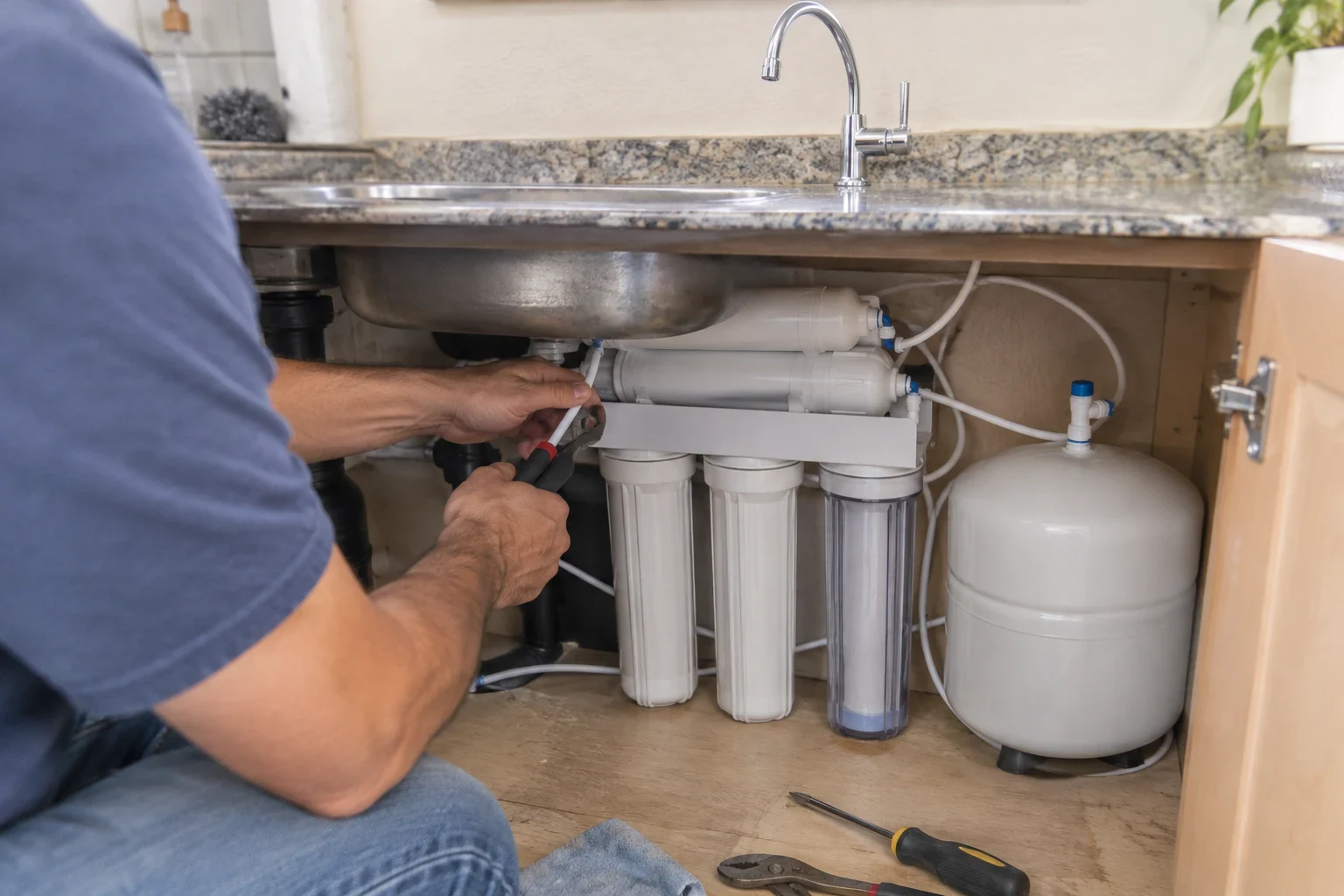
Reverse osmosis relies on your home's water pressure to force water across a thin-film composite membrane whose openings are much finer than any carbon cartridge. Dissolved salts, metals like lead and a wide range of trace substances stay on the reject side and are flushed away through the drain line. The purified water fills a compact pressurized tank in the cabinet and flows from its own faucet next to your regular tap.
Because it sits at one sink, RO only treats the water you drink and cook with. Your shower, laundry and dishwasher still get untreated water. If a chlorine smell through the house or white scale on fixtures is what bothers you, whole-home filtration or a water softener may be the better fix, and plenty of homes run one of those alongside an RO unit in the kitchen.
From start to finish you have one contact. The person who explains stages and tank sizes on the phone also books the install and follows up with you afterward if the flow or taste needs a tweak.
Parts and Work Included in Your Install
- Sediment and carbon prefilters
- The sediment cartridge traps sand, grit and rust particles. The carbon block behind it removes chlorine, which would otherwise degrade the polyamide surface of a thin-film composite membrane.
- The membrane itself
- This is the stage that separates dissolved solids from the water. We match its daily rating to how much your household uses, so the tank keeps up without the system running to drain for hours.
- Pressurized tank and auto shutoff
- A small tank stores purified water behind an air charge, which gives the faucet even flow. The automatic shutoff valve halts production once the tank fills, so water isn't wasted overnight.
- Separate faucet and brine line
- Your purified water gets its own faucet, set in the sink deck or countertop. The brine line connects to the sink drain through a saddle fitting and an air gap, which keeps drain water from siphoning back toward the unit.
- Polishing and remineralizing options
- A final carbon cartridge takes out any taste the water picks up while sitting in the tank. A remineralizing cartridge returns some calcium and magnesium for anyone who finds plain RO water flat.
- Refrigerator and ice maker hookup
- When the kitchen layout allows, we run tubing to the fridge so the dispenser and ice maker use RO water too.
When Reverse Osmosis Is the Right Call
Bottled water is on every shopping list
If you haul home cases of water every week, an RO faucet lets you fill bottles and pitchers at your own sink instead.
You have concerns about older plumbing
Lead in tap water usually comes from aging service lines, solder joints or brass fittings in the house, not from the treatment plant. A correctly sized RO membrane reduces lead right where you fill glasses and pots.
Drinks and ice don't taste right
Dissolved minerals and leftover disinfectant affect the flavor of coffee and tea and make ice cloudy. Purified water brews cleaner and freezes clearer.
A pitcher filter isn't cutting it
Pitcher and faucet-mounted filters rely mostly on carbon. That helps taste, but it doesn't lower dissolved solids the way a membrane can.
Your existing RO unit is sluggish
Hours to refill the tank usually means a fouled membrane, clogged prefilters or a tank that lost its air charge. We can service it, or replace it through our water softener and filtration system replacement work.
What Moves the Price of Reverse Osmosis
The price mostly depends on the equipment you choose and the conditions under your sink. We go over each option during the call, so the quote covers parts, labor and any extra lines rather than just the base unit.
How many treatment stages
A standard four-stage system sits at the lower end. Adding a remineralizer, a UV lamp or a second polishing cartridge raises it. We'll tell you plainly which extras help your water and which are just upsell.
Membrane rating and tank capacity
A bigger household drinks and cooks more, so it may need a membrane rated for higher daily output and sometimes a larger storage tank. Both add cost.
Incoming pressure
When feed pressure runs low, the membrane produces slowly and sends more water to drain. A booster pump solves this, but it adds hardware and needs a nearby outlet.
Countertops, fridge lines and tight cabinets
Drilling stone like quartz or granite, running tubing across to a refrigerator, or fitting the unit around a disposal all take extra labor.
How Your RO Install Goes
- 1
We talk it through by phone
You tell us how many people drink the water, whether the fridge should be connected and what currently sits under the sink. We explain which stages make sense and give you a clear quote by phone.
- 2
Pressure, cabinet and drain checks
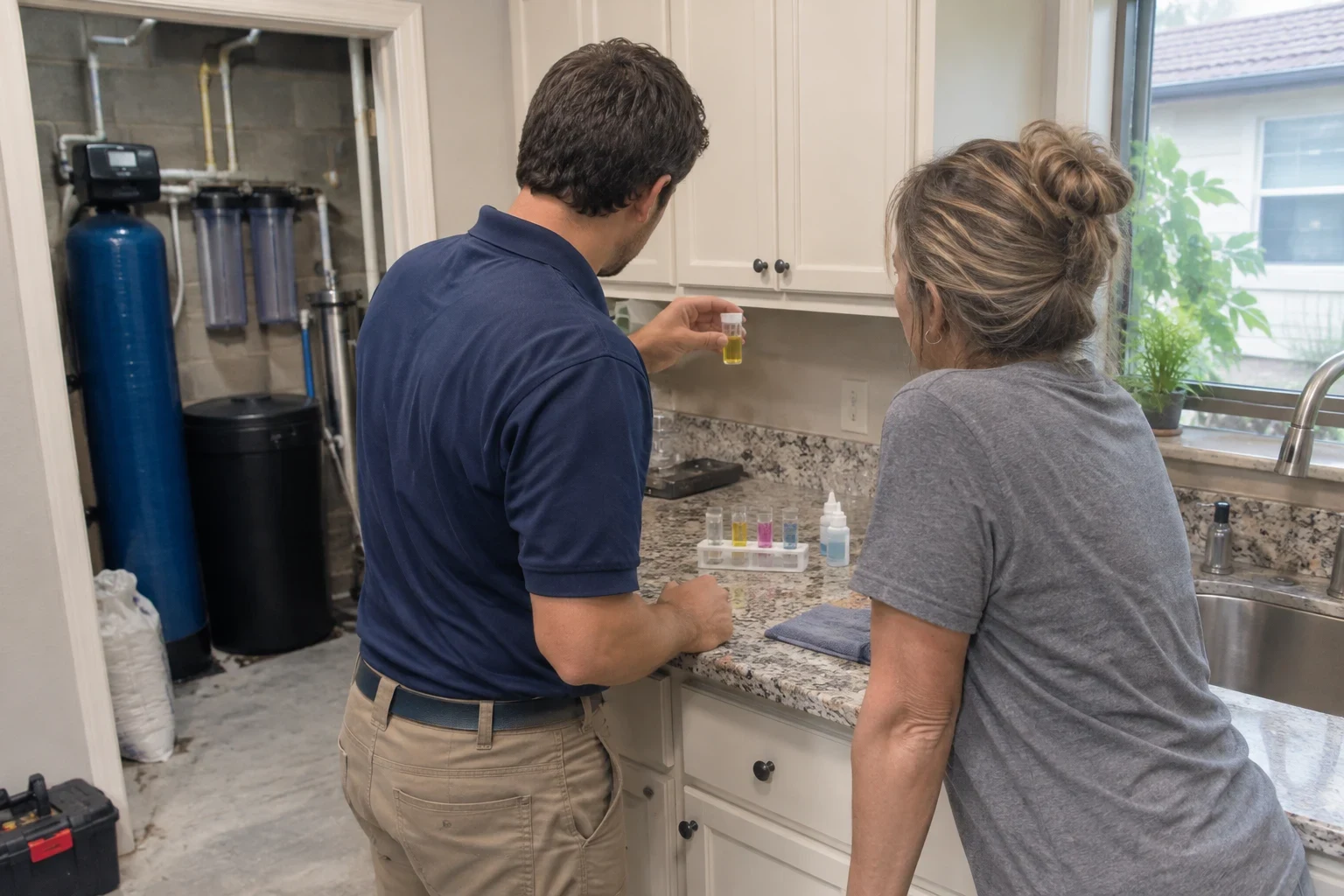
A membrane needs feed pressure of roughly 40 psi or more to produce well. Before we drill anything on install day, we measure pressure, confirm cabinet clearance and look at the drain. A booster pump goes in only if the reading is low.
- 3
Mounting the system
With the cold line shut off, we tee in a dedicated supply valve for the RO unit. The cartridge housings are fastened to the cabinet wall and the storage tank stands beside them. The faucet goes into a new hole or the old sprayer opening, then the drain saddle is connected. Most installs finish in a few hours.
- 4
First flush and final walk-through
Fresh carbon and a new membrane give off fine particles and a shipping preservative, so we run water through and dump the first full tank. Then we inspect each fitting for leaks, confirm the shutoff valve closes, show you how to change cartridges and clean the work area before we go.
Reverse Osmosis FAQs
How much water goes down the drain?
All RO systems flush part of the incoming water to keep the membrane surface clear. The amount depends on the membrane design and your feed pressure. Steady pressure plus a working automatic shutoff valve keeps the drain ratio lower, and on some setups a permeate pump trims it more.
How often will I replace cartridges?
Most homes swap the sediment, carbon and post-filter cartridges roughly once a year, or sooner with heavy use. A membrane often lasts several years, provided the carbon stage in front of it is changed on time so chlorine never reaches it. You also get ongoing customer support for maintenance, filter replacements, and service needs. When a cartridge comes due, the person who set up your system is the one you reach by phone.
Does RO water taste different from tap water?
It does. Because the membrane removes most dissolved minerals, the water tastes very clean, and some people describe it as flat. A remineralizing cartridge puts a little calcium and magnesium back in if you like a rounder taste.
Can the system go under a sink other than the kitchen?
Yes, as long as that sink has a cold supply, a drain and enough cabinet room for the tank. A bar sink or bathroom vanity often works. Some homes instead run tubing from the kitchen unit to the refrigerator rather than buying a second system.
Is RO enough, or do I need whole-home filtration too?
That depends on what bothers you. RO treats only the water you drink and cook with. If you smell chlorine in the shower or see scale on fixtures, our chlorine and chloramine removal or whole-home filtration service handles every tap in the house.
Get Drinking Water Worth Pouring From Your Own Tap
Let us know how many people live in your home, what is under the sink now and whether you want a fridge line. The person on the phone is the one who plans the install and checks it before leaving.