ServicesSoftener Repair & Maintenance
Water Softener Repair & Maintenance in Safety Harbor
When a softener stops regenerating, the cause is usually one specific part: a worn piston seal, a plugged injector, a salt bridge or tired resin. We find which one, explain why it failed and fix it, with one person handling your job from the first call to cleanup.
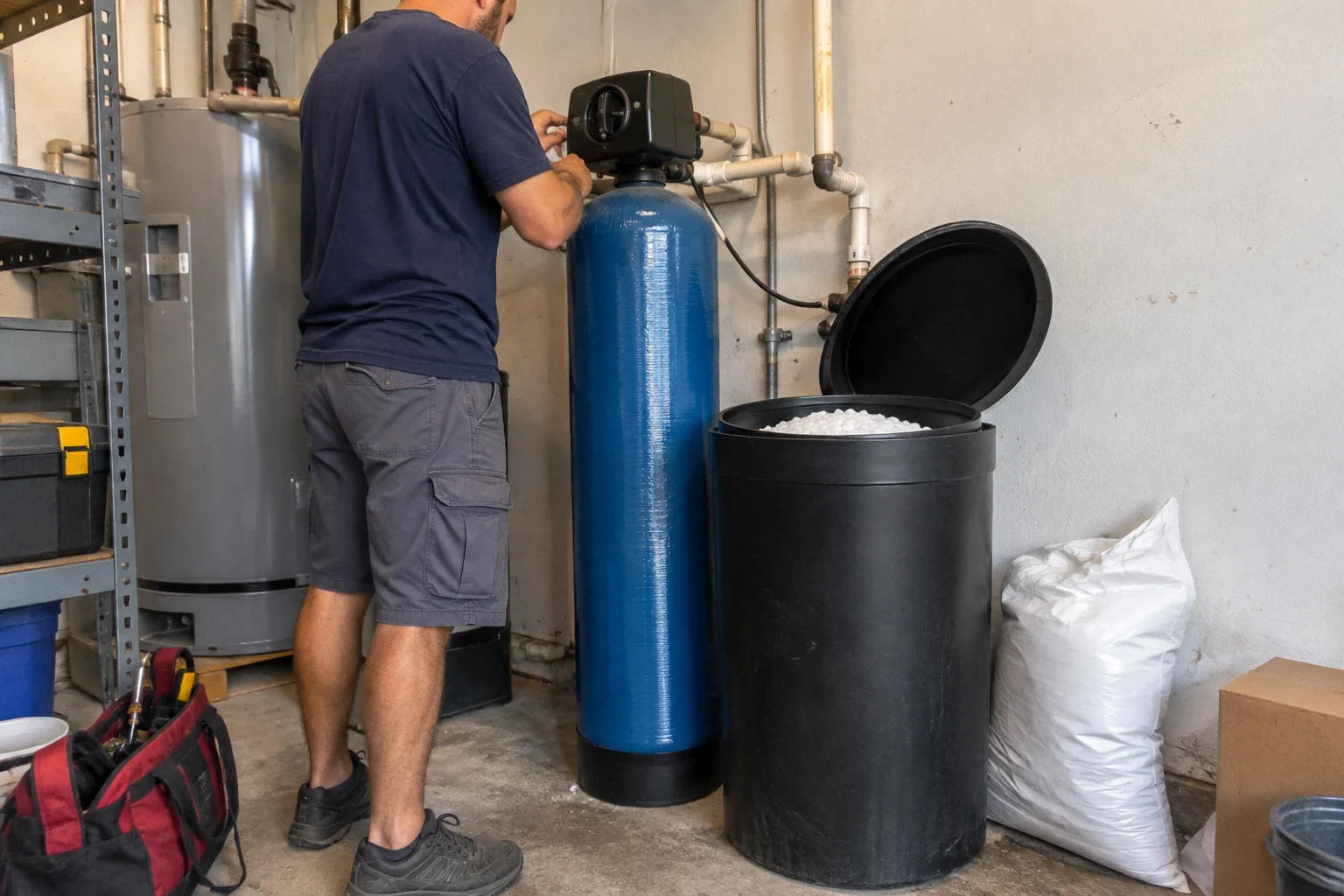
What softener repair and maintenance actually covers
A softener works by passing your home's water through a tank of resin beads that trade sodium for hardness minerals. Every few days the control valve runs a regeneration cycle: backwash, brine draw, slow rinse, fast rinse and refill. If any step fails, the resin stays loaded with calcium and magnesium and hard water goes straight to your fixtures.
Most problems show up in one of three places: the control valve on top of the resin tank, the brine tank and its plumbing, or the resin itself. We look at all three before recommending anything, because replacing a valve will not help if the real fault is a cracked brine line.
The person who picks up when you call is the same one who schedules the visit and follows up afterward. You don't repeat your story to three different people.
What we check and fix
- Control valve service
- We inspect the piston, seals and spacers inside the valve head, along with the drive motor and timer or meter. Worn seals let water bypass the resin or leak to drain. A seal and spacer kit often restores a valve that seemed finished.
- Injector and brine line cleaning
- The injector, or venturi, creates the suction that pulls brine into the resin tank. Sediment and salt debris plug its tiny orifice, so the tank never draws brine. We clean or replace the injector and screen and confirm the brine line is drawing.
- Brine tank cleanout
- We break up salt bridges, remove mushed salt from the tank floor and check the brine well and safety float. A hard crust over an empty pocket of water is one of the most common reasons a softener quietly stops softening.
- Resin assessment and replacement
- Chlorine and chloramine in treated water slowly break down resin beads, and iron can coat them. When resin turns mushy or fouled, we replace it and check the distributor tube and riser for cracks.
- Settings and cycle check
- We set the clock, confirm the hardness and capacity programming and run a manual regeneration so you can see each stage complete.
Signs your softener needs service
Hard water symptoms return
Chalky crust around faucets, film on glassware or shampoo that barely foams tells you hardness minerals are reaching your fixtures. Either the resin is skipping regeneration or it can no longer hold its capacity.
The salt bag lasts forever
A softener that's working uses salt steadily. If the pellets sit at the same height for weeks, brine isn't being pulled into the resin tank, and a salt bridge, clogged injector or stuck valve is usually behind it.
Brine tank holding too much water
A tank that's half full of water or close to overflowing suggests the refill control has failed, the drain line is restricted or the brine valve isn't shutting off.
Water running to drain for hours
Hearing the unit flush long after a cycle should have ended, or at strange times of day, often points to worn seals or a damaged piston. Both waste water and salt.
Small amber beads in fixtures
Finding tan or brown beads in an aerator screen or toilet tank means resin is escaping, usually through a cracked distributor or upper screen inside the resin tank.
Cycles at the wrong time after an outage
Summer storms here can wipe the clock on older timer-based valves, so the softener regenerates while you're using water or misses cycles altogether.
What affects the cost of a softener repair
Most repairs are priced by the part that failed and the time it takes to get to it. A brine tank cleanout and injector cleaning cost far less than a new valve head or a full resin change. We explain the cost by phone or on site before any work begins.
Which component failed
A seal and spacer kit is a small repair. A new drive motor, circuit board or complete valve body costs more.
Resin volume
Resin is sold by the cubic foot, and larger tanks hold more of it. Replacing resin also means removing the valve and rebedding the tank.
Age and parts supply
Older or discontinued valves may need adapters or harder-to-find parts, which adds cost and sometimes tips the decision toward replacement.
Access to the unit
A softener in an open garage is quicker to service than one wedged into a closet or behind a water heater.
How a repair visit runs
- 1
Talk it through by phone
Tell us the brand, the model if you can find it on the valve label, and what you're seeing. That lets us bring the likely seal kits and parts on the first trip.
- 2
Diagnose before touching anything
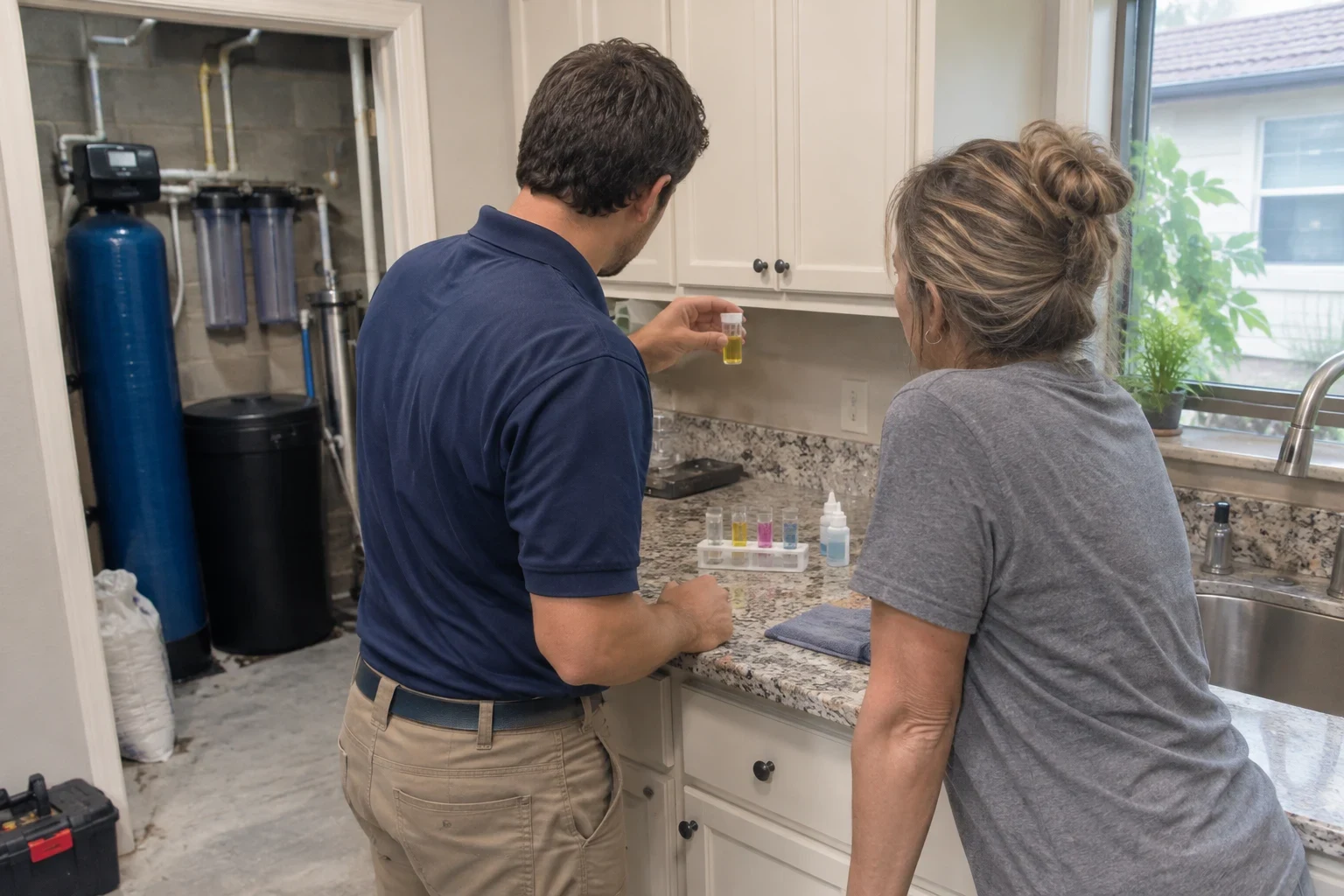
We put the valve into bypass, step it through each regeneration stage and watch what happens at the brine tank and drain. Then we show you what we found and explain why it failed.
- 3
Your choice: repair or replace
You get a clear cost for the repair before we start. If the valve or tank is old enough that parts are scarce, we say so plainly and explain what replacement would involve.
- 4
Fix, run and clean up
We complete the repair, run a full cycle, check for leaks at the bypass and fittings and clear away old salt and parts. Your floor is left as we found it.
Softener repair questions
How often should a water softener be serviced?
Most homes do well with a yearly check of the valve, injector and brine tank. Homes on well water or with iron in the supply may need it more often, because iron fouls resin and screens faster. Keep the salt topped up between visits.
Can you work on a softener someone else installed?
In most cases, yes. Most residential softeners use a handful of common control valves, and parts are widely available. Give us the brand and model on the call so we can confirm before we come out.
Is it worth repairing an old softener?
Often it is, if the tank is sound and the valve is a common type. If the resin, valve and brine tank all need work at once, replacement can make more sense. Our Water Softener & Filtration System Replacement page explains that option, and we'll give you an honest comparison either way.
What kind of salt should I use?
Clean, high-purity pellets or crystals cause fewer problems than rock salt, which leaves insoluble grit in the tank. Pellets also resist bridging better. Fill the tank about halfway rather than to the top, especially in humid weather.
Do I need to be home during the visit?
Yes, for at least the start and the end. We need access to the softener and a drain, and we walk you through what we found and the cycle we ran before we leave.
Get your softener regenerating again
Tell us what the unit is doing and we'll explain the likely cause on the call. After the repair, we stay available for ongoing customer support for maintenance, filter replacements, and service needs.