ServicesWell Water Treatment
Well Water Treatment in Safety Harbor
We design and install treatment systems for private wells that clear out the rotten-egg smell, the orange stains and the grit in your fixtures. The same person who answers your first questions sizes the equipment, schedules the install and checks the finished work before we leave.
What well water treatment does for your home
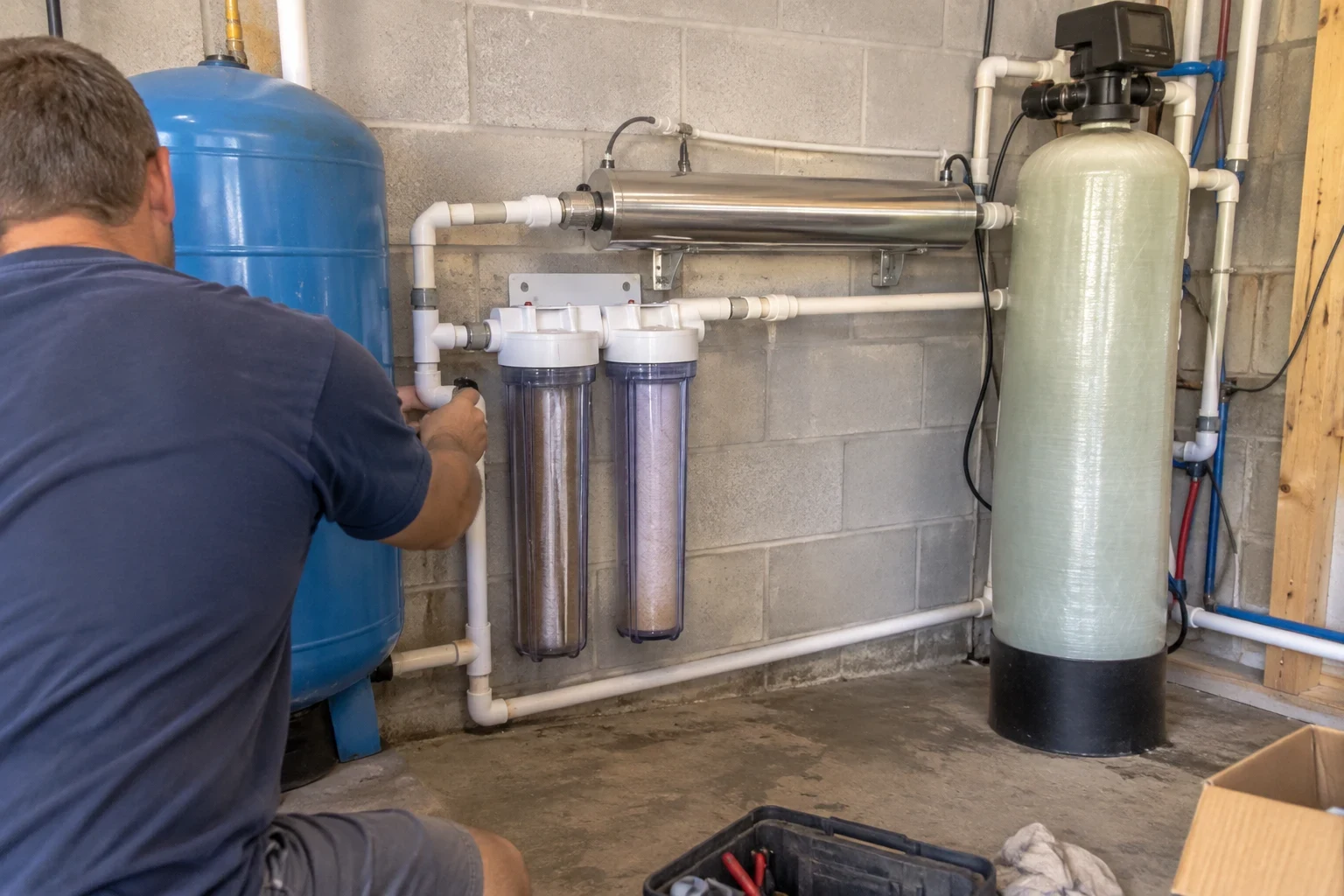
A private well delivers whatever the ground puts into it. Wells drawing from Florida's limestone aquifer commonly carry dissolved iron, hydrogen sulfide gas, hardness minerals and fine sand. None of that is filtered by a utility before it reaches your faucets, so the treatment has to happen at your home.
A well system is usually a short train of equipment, not one tank. A sediment filter catches sand first. An oxidizing filter converts dissolved iron and sulfide into particles it can trap and then backwash to drain. If hardness or tannins are also present, a softener or tannin unit follows. We size each stage to the gallons per minute your pump actually delivers, because an undersized tank lets iron slip through at high demand.
You talk to the same person the whole way through. That person explains why each stage is there, schedules the install and answers the call later if something smells off again.
What the work includes
Wellhead and equipment review
We look at your pump, pressure tank, pressure switch setting and existing plumbing. We note pipe size, where a backwash line can drain and whether there is a dedicated outlet nearby.
Sediment pre-filtration
A spin-down or cartridge sediment filter goes ahead of everything else. It protects the control valves downstream from sand that would score seals and clog injectors.
Iron and sulfur removal
We install an air-injection or oxidizing-media filter that turns dissolved iron and hydrogen sulfide into solids. The media bed traps them, and a timed backwash flushes them to drain so the bed stays clean.
Hardness or tannin stage when needed
If your water also leaves white scale or has a tea tint, we add a softener or tannin unit after the iron filter. Putting it after the iron stage keeps the resin from fouling with iron.
Bypass, startup and cleanup
We plumb a bypass valve into each install, so your home still has running water while a tank is being serviced. Then we program the control valves, run the first backwash, flush the lines and take the packaging and old parts with us.
Signs your well needs treatment
Rotten-egg smell
That odor is hydrogen sulfide gas. It is often strongest on the hot side, because the magnesium anode rod in your water heater can react with sulfate and make more of it.
Orange or red staining
Dissolved iron is clear coming out of the tap, then oxidizes in air and leaves rust-colored rings in toilets, tubs and on irrigated walls and driveways.
Black specks or gray film
Manganese, or iron sulfide from a sulfur well, shows up as dark grit in the toilet tank and smudges on laundry.
Sand in aerators
Grit that clogs faucet screens and shower heads usually means the pump is pulling fine sediment. It also wears out fill valves and appliance solenoids.
Slime in the toilet tank
A reddish or slick coating points to iron bacteria. They feed on dissolved iron and can clog pipes and filters if left alone.
How a well treatment job runs
- 1
The first conversation
Tell us what you notice at the tap, from odor to stains to grit, and we will ask about your well depth, your pump and any lab report you already have on hand. Whoever picks up that call stays with your job until it is finished.
- 2
Site visit and written estimate
At your home we measure the floor space, check the gallons per minute your pump delivers and find where a drain line and power outlet can go. The written estimate breaks out every stage and explains the reason for each one.
- 3
Installation
With the pump switched off, we cut the bypass valve into your line and set each tank on a level base. Most installs are done in one day, and your water is only off for part of that time.
- 4
Commissioning the system
Each tank is filled and put through its first backwash so loose media fines rinse out before water reaches your fixtures. We program when the valves regenerate, show you how to switch to bypass, then clear the work area and haul away packaging.
- 5
Help after the install
Our ongoing customer support covers maintenance, filter replacements and service needs. When a cartridge comes due or a valve setting needs a look, you call the same contact who coordinated your install.
What moves the price
Well systems are priced by what has to come out of the water and how much water the house uses at once. Two homes with similar odor problems can need very different equipment. Your written estimate shows each component so you can see where the cost sits.
- Number of problems in the water
- Sulfur alone may need one oxidizing filter. Sulfur plus iron, hardness and tannins can need three or four stages.
- Pump flow rate
- A pump delivering high gallons per minute needs larger tanks with enough backwash flow to clean the media bed. Undersizing saves money upfront and costs it back in breakthrough.
- Location and drain access
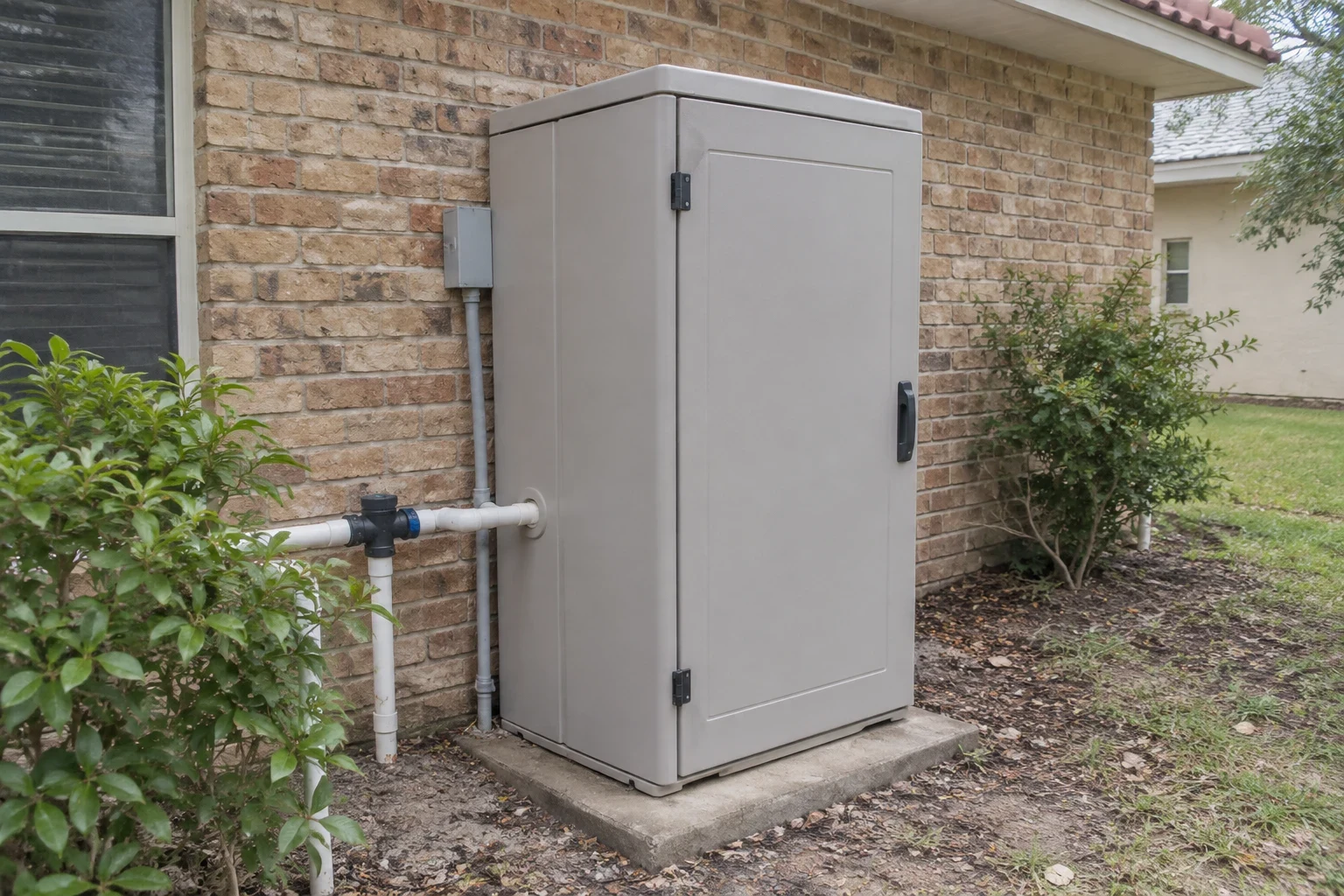
- Equipment in a garage with a nearby drain is simpler than an outdoor pad that needs a long discharge line, a dedicated outlet and a sun cover for the valves.
- Removing old equipment
- Taking out a failed filter or softener adds labor, especially if the old plumbing has to be reworked to fit the new layout.
Well water treatment questions
Something not covered here? (727) 217-5495
Do I need lab results before you can recommend a system?
They help a great deal. Well chemistry decides which media works, and iron levels or pH can change the right choice entirely. If you have a recent report from an independent lab, have it handy when you call and we will go through it with you.
Will a treatment system lower my water pressure?
Every stage adds some pressure drop. Sizing each tank to your pump's flow rate keeps that drop small enough that most people do not notice it. We also check your pressure switch setting during the visit.
Where does the backwash water go?
Oxidizing filters flush trapped iron and sulfur to a drain on a set schedule, usually overnight. That can be a floor drain, a standpipe or an approved outdoor discharge point. We plan the route before install day.
Can I add drinking water filtration later?
Yes. Many well owners add an under-sink reverse osmosis unit after the whole-house system is in place. Treating the well water first protects the RO membrane from iron fouling.
What maintenance does a well system need?
Sediment cartridges need changing, and the iron filter's air or chemical settings may need adjusting as your well changes. Softener stages need salt. We can set you up on a schedule and handle filter replacements.
Get your well water under control
Tell us what you are seeing at the tap and what equipment is on the well now. One person will take it from there, through the estimate, the install and the cleanup.