ServicesWhole-Home Filtration
Whole-Home Filtration in Safety Harbor
A point-of-entry carbon system treats water where it enters your home, so your shower, kitchen faucet and ice maker all draw from the same filtered supply. The same person sizes the tank, sets the install date and shows you the bypass once everything is running.
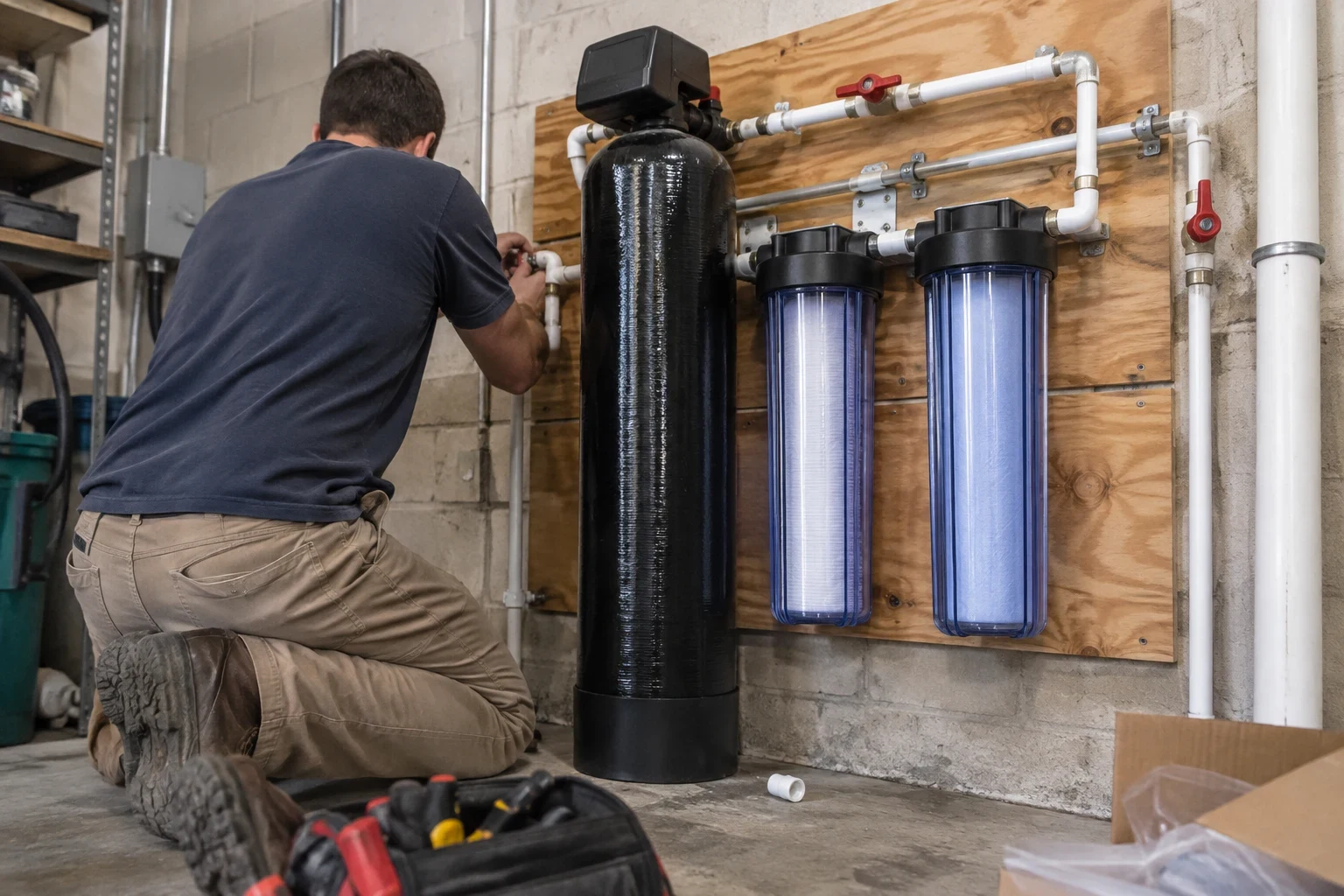
What a whole-home system does, and when it fits
A whole-home filtration system sits on the main line where water enters your home, ahead of the water heater and every branch line. The working part is a tank of catalytic carbon that adsorbs chlorine and breaks down chloramine. A sediment prefilter usually sits in front of it to catch sand, grit and pipe scale before they reach the carbon bed and shorten its life.
It is the right call when the complaint is house-wide: a bleach smell in the shower, an off taste at every tap, dry skin after bathing. If your only concern is drinking water, an under-sink reverse osmosis unit is often the better spend, and we will tell you that. If spotting and scale are the problem, carbon will not fix hardness. That is a job for a water softener.
One person handles your job from the first call through cleanup. The details you mention about your plumbing on day one are the same details the installer works from on install day.
What the installation includes
- Sediment prefilter
- A cartridge housing mounted ahead of the main tank catches particles down to its micron rating. With grit kept out, the carbon bed does not channel, which is when water cuts a path through the media and bypasses most of the treatment.
- Catalytic carbon tank sized to your flow
- Tank size comes from your home's peak demand in gallons per minute, not its square footage. An undersized tank rushes water past the carbon, and chloramine needs longer contact than chlorine to be removed.
- Bypass valve and shutoffs
- Each system gets a bypass, so the house keeps running water while the filter is serviced. Isolation valves on the inlet and outlet let us change a cartridge without draining your lines.
- Proper pipe connections
- Copper, PEX and CPVC each get fittings made for that pipe. Where two different metals meet, we put in a dielectric union to keep the joint from corroding.
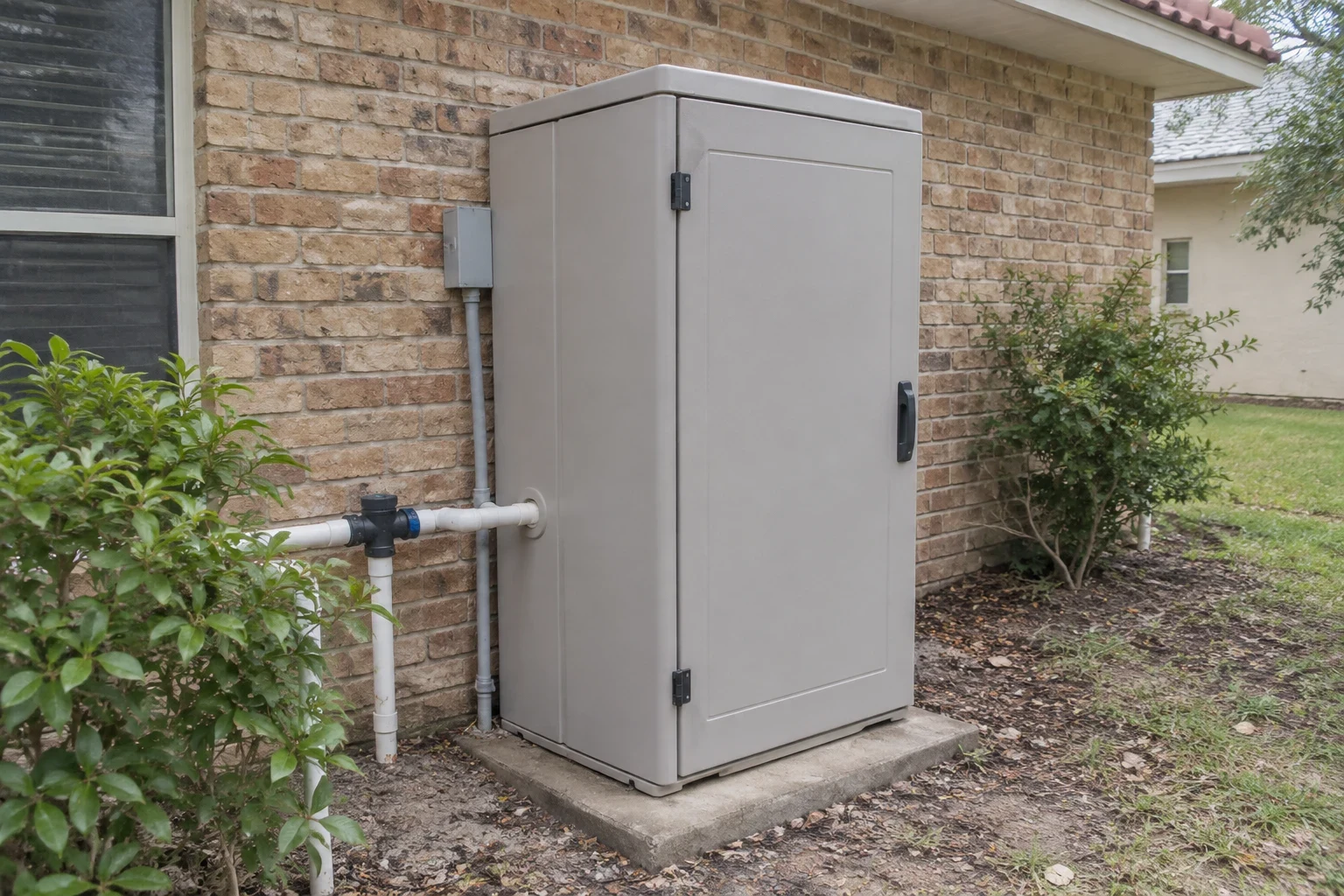
- Protection for outdoor equipment
- In many Florida homes the main line comes in through an exterior wall or the garage. If the tank ends up outside, we cover or enclose it so sunlight does not degrade the shell and fittings.
- Startup flush and walkthrough
- Fresh carbon sheds fine dust, so we rinse the bed until the water comes out clear before the system goes into service. Our support continues after install day, covering upkeep, cartridge changes and any service the system needs later.
Signs the water problem is house-wide
Bleach odor strongest at the shower
Warm water drives dissolved chlorine into the air, and an enclosed stall traps it. When the odor is worse in the bathroom than at the kitchen sink, filtering at the point of entry removes it at the source.
The same taste at every faucet
If coffee, ice and the bathroom tap all carry one flavor, the cause is the water coming into the house, not a particular fixture.
Grit in aerators and showerheads
Rinsing sand or flakes out of faucet screens again and again means sediment is moving through the plumbing. A prefilter catches it before it reaches valves and appliances.
Tight skin and dry hair after bathing
Many people notice their skin feels more comfortable once the disinfectant is filtered out of bath and shower water.
Rubber parts failing early
Chloramine is harder on rubber than chlorine. Flappers, washer hoses and faucet seals that swell or crack before they should can be a clue.
How the job runs from call to cleanup
- 1
A conversation by phone
Tell us what you notice and which faucets it shows up at. We ask about the number of bathrooms, the pipe material in your home and the spot where water enters the house, then explain which type of system fits before we set a visit.
- 2
Site visit and written estimate
We find the main line, measure its size, test pressure and flow, and pick a location with room to service the system later. The estimate lists the tank, prefilter, valves and labor as separate lines.
- 3
Install day
We shut the main valve, cut in the bypass and set the tank on a level base. Water is typically off for a few hours, and we tell you the expected time before any pipe is cut so you can plan your day.
- 4
Flush, check and clean up
We pressure-check each joint, rinse the carbon until the water runs clear and restore water to the house. Packaging and pipe scraps leave with us, and we show you the bypass handle and when the prefilter cartridge will need changing.
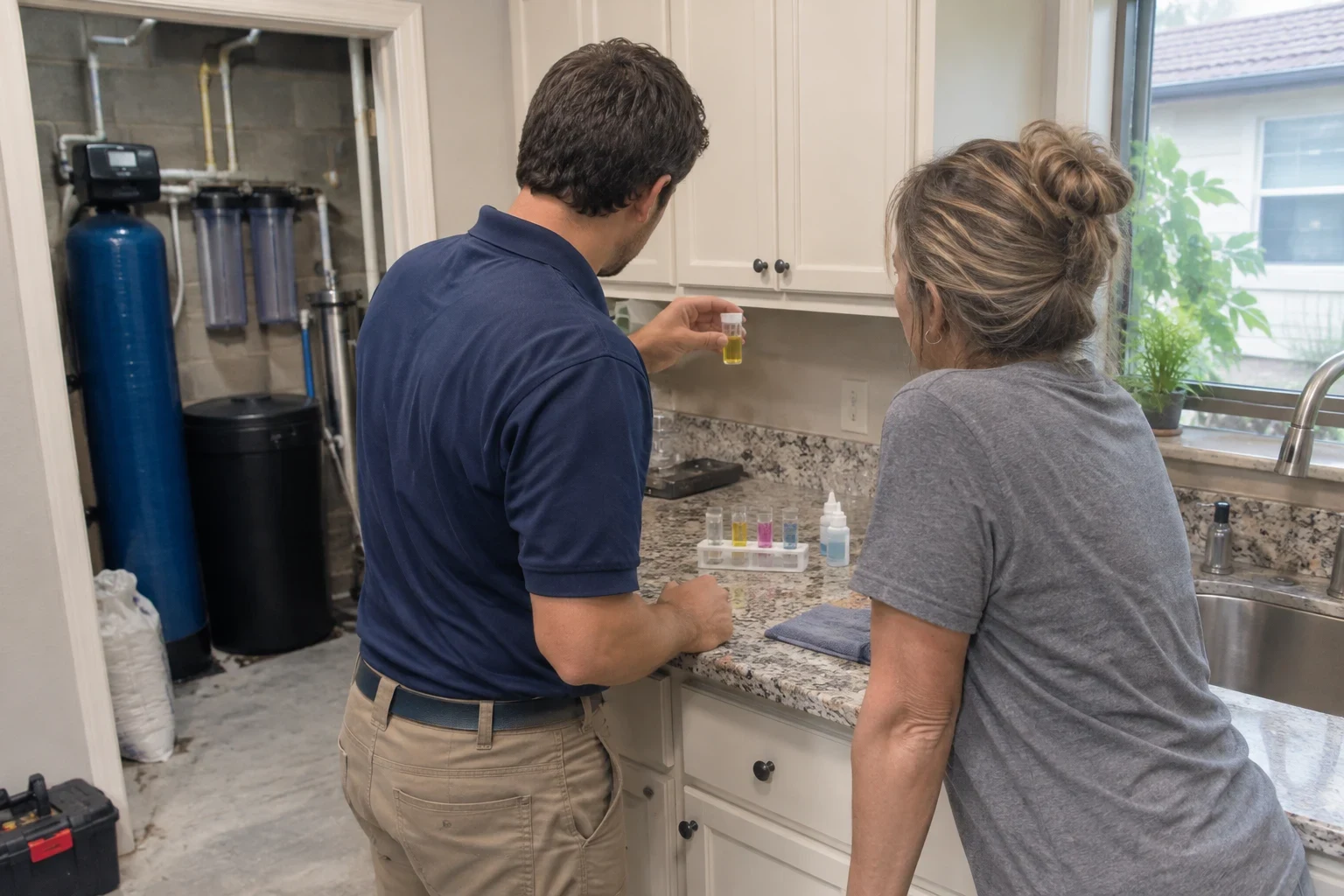
What moves the cost of a whole-home system
The price comes down to how much water your home moves at once and how hard it is to reach the main line. We give you the number by phone after the details are clear, and the written estimate shows each part so nothing is hidden in a lump sum.
- Tank size and flow rate
- A home with three or four bathrooms needs a larger media volume to keep contact time up at peak flow, and larger tanks cost more.
- Type of carbon
- Catalytic carbon costs more than standard granular activated carbon. If your water is disinfected with chloramine, it is the media that does the job.
- Location and plumbing access
- A main line exposed in the garage is quicker to tap than one inside a finished wall or under a slab. Longer pipe runs to reach a good spot add materials and time.
- Extras you choose
- Pressure gauges on each side of the filter, an outdoor enclosure, or a second prefilter stage each add to the total. We explain what each one does so you can decide.
Whole-home filtration questions
Something not covered here? (727) 217-5495
Does a whole-home filter remove chloramine?
Standard carbon is good at chlorine but struggles with chloramine. Catalytic carbon has a surface treatment that breaks the bond between chlorine and ammonia, as long as the water spends enough time in the media. That contact time is why tank sizing matters, and we size for it. The annual water quality report from your utility tells you which disinfectant it uses.
Will it lower my water pressure?
When the tank matches your flow, the drop is small and most households never feel it. Weak pressure after an install usually means the tank is too small for the house or the prefilter cartridge is clogged with grit. We base the sizing on gallons per minute to avoid the first problem, and if you choose gauges on each side of the filter, we show you how a growing gap between them tells you a cartridge is due.
How often does the carbon need replacing?
It depends on how much water your household uses and how much disinfectant arrives in it. A carbon bed usually lasts several years, and the prefilter cartridge gets changed more often. During the walkthrough we give you a schedule worked out for your home.
Will this soften my water?
No. Carbon removes disinfectants and improves taste and smell, but calcium and magnesium flow through it untouched, and those minerals are what form scale. If you find white crust on fixtures, a water softener is the tool for that, and the two systems can go in during the same install.
Do I still need a reverse osmosis system?
For taste and odor, whole-home carbon covers most houses on its own. An under-sink reverse osmosis unit adds another stage just for drinking and cooking water, which some owners of older homes with original plumbing prefer. We can walk you through the difference by phone.
Get filtered water at every faucet
Describe what you smell, taste or find in the faucet screens, and where in the house it shows up. The person who takes your call plans the system and stays with the job until the last scrap of pipe is hauled away.